
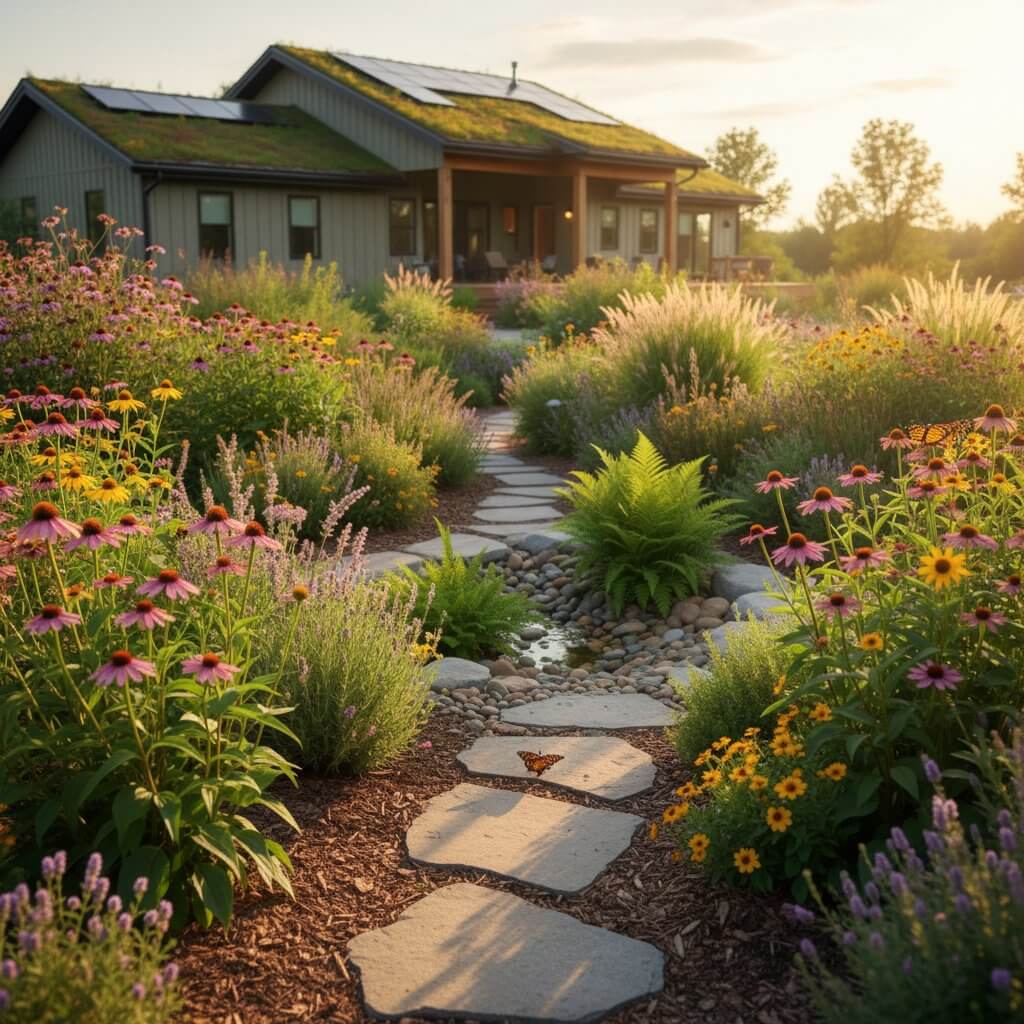
Sustainable landscaping is about creating an outdoor space that looks attractive while using water, soil, plants, and landscape materials more efficiently. Instead of depending on excessive irrigation, frequent chemical treatments, or constant maintenance, the landscape is designed to work more closely with local conditions.
For Denver-area homeowners and property managers, sustainable landscaping can provide practical benefits ranging from healthier soil and lower water demand to easier maintenance. The most effective approach combines climate-appropriate plants, efficient irrigation, soil improvement, mulch, and carefully selected landscape materials.
Key Takeaways
- Sustainable landscaping can reduce unnecessary water use and ongoing maintenance.
- Native and climate-adapted plants can perform well with fewer inputs when matched to the right site.
- Compost helps improve existing soil by adding organic matter.
- Efficient irrigation delivers water according to actual plant needs.
- Rock, mulch, and other landscape materials can reduce exposed soil and create lower-maintenance areas.
- Sustainable landscaping works best when plants, soil, water, and materials are planned as one system.
What Is Sustainable Landscaping?
Sustainable landscaping is a method of planning, installing, and maintaining outdoor spaces with long-term resource efficiency in mind.
Rather than focusing only on appearance, sustainable landscape design considers how much water plants require, whether the soil supports healthy roots, how much maintenance an area needs, and how landscaping choices affect the surrounding property.
This approach can still include lawns, trees, flower beds, patios, pathways, and decorative features. The goal is not to remove traditional landscaping but to use these features more intentionally.
A lawn, for example, may make sense in an area used for recreation. A steep or difficult-to-irrigate section may be better suited to drought-tolerant plants, mulch, rock, or another lower-maintenance treatment.
Environmental Benefits of Sustainable Landscaping
One of the biggest advantages of sustainable landscaping is more efficient use of natural resources.
Water is especially important in Colorado, where dry conditions can make irrigation a major part of landscape maintenance. Selecting plants according to local conditions and designing irrigation around their needs can reduce unnecessary watering.
Sustainable landscapes can also provide more varied plant habitats.
Using a mixture of suitable flowering plants, shrubs, grasses, and trees can create more diverse outdoor spaces than landscapes dominated by a single plant species.
Reducing unnecessary chemical applications is another benefit. Healthy soil, appropriate plant selection, and proper watering can help create stronger growing conditions and may reduce the need to continually correct landscape problems with additional products.
Water Conservation Through Better Landscape Design
Reducing water use does not mean allowing the landscape to become dry or unhealthy.
It means applying water where it provides the greatest benefit.
Grouping plants with similar watering requirements is one practical approach. Plants that prefer relatively dry conditions can be placed together, while species requiring more consistent moisture can occupy another irrigation zone.
Efficient systems such as drip irrigation can deliver water directly to planting areas instead of spraying surrounding pavement or unused spaces.
|
Landscaping Approach |
Water Efficiency Benefit |
|
Climate-adapted plants |
Reduces demand for supplemental irrigation |
|
Drip irrigation |
Targets water near plant roots |
|
Mulch |
Reduces moisture loss from exposed soil |
|
Proper plant grouping |
Allows irrigation by actual water needs |
|
Seasonal irrigation adjustments |
Prevents unnecessary watering during cooler periods |
Irrigation systems should also be inspected periodically. Broken heads, leaks, overspray, and poorly adjusted schedules can waste significant amounts of water even when the rest of the landscape is designed efficiently.
Healthier Soil with Compost
Sustainable landscaping begins below the surface.
Soil provides roots with water, nutrients, oxygen, and physical support. When soil becomes compacted or depleted of organic matter, plants may struggle even when irrigation and maintenance are adequate.
Adding compost can improve existing garden soil by increasing organic matter.
Compost may help improve soil structure, support biological activity, and influence moisture retention. These qualities can be especially useful in planting beds where soil has been disturbed, compacted, or repeatedly cultivated.
In clay-heavy soil, organic matter can improve workability over time. In sandy soil, compost can help the soil retain moisture and nutrients more effectively.
Compost should be used according to existing conditions rather than applied in excessive quantities. Sustainable soil management focuses on adding what the soil needs rather than assuming more amendment will always produce better results.
Native and Climate-Adapted Plants
Plant selection can determine how sustainable a landscape becomes.
Native plants are often useful because they have developed under regional environmental conditions. Once properly established, many can perform well without the same level of irrigation or intervention required by plants adapted to wetter climates.
However, a plant should not be selected solely because it is native.
Sun exposure, drainage, soil type, mature size, wind exposure, and available irrigation also matter. A plant suited to sunny, dry conditions may struggle in a heavily shaded section of the property.
Climate-adapted plants that are not strictly native can also have a place in sustainable landscapes when their requirements match the site.
The goal is to choose plants that are naturally suited to the conditions you can reasonably provide.
Reduce Maintenance with Thoughtful Material Choices
Not every part of a landscape needs to be covered with turf or densely planted vegetation.
Decorative rock, sand, mulch, pathways, and other materials can create functional areas while reducing the amount of space requiring irrigation and mowing.
ARS Landscape Materials & Supply offers Rock & Sand options that can be incorporated into landscape designs where appropriate.
Rock can work well around pathways, utility areas, drainage features, or selected low-water landscape zones. However, large rock-covered areas can absorb and radiate heat, so placement should be planned carefully around plants.
Organic mulch is another useful option around trees, shrubs, and planting beds. It helps cover exposed soil, reduce weed competition, and slow moisture loss.
Different materials serve different functions, so sustainable landscaping does not mean using rock everywhere. It means choosing the material that best fits each section of the property.
Potential Economic Benefits
Sustainable landscaping can reduce some recurring maintenance expenses by lowering the amount of water, mowing, fertilization, and replacement planting a property requires.
The amount saved depends on the existing landscape and how extensively it is redesigned.
A property with large areas of high-maintenance turf may see a more noticeable change than a smaller landscape that already uses efficient irrigation and climate-appropriate plants.
Initial installation costs should also be considered.
Replacing irrigation systems, installing new beds, or purchasing plants and landscape materials requires an upfront investment. Sustainable landscaping is most effective when decisions are evaluated based on long-term performance rather than immediate cost alone.
Lower Long-Term Maintenance
A well-designed sustainable landscape should become easier to manage as plants become established.
Selecting plants according to mature size can reduce repeated pruning. Grouping plants by irrigation need simplifies watering, while mulch can limit weed pressure and protect the soil surface.
Reducing unnecessary lawn areas can also decrease mowing requirements.
This does not mean creating a maintenance-free landscape. Trees still require care, irrigation systems require inspection, and planting beds need periodic attention.
The objective is to avoid creating areas that constantly require corrective work because the plants, soil, or materials were poorly matched from the beginning.
Sustainable Landscaping and Outdoor Enjoyment
Resource efficiency does not have to come at the expense of appearance or usability.
A sustainable landscape can include shaded seating areas, flowering plants, pathways, lawn areas, vegetable gardens, and gathering spaces.
Carefully designed planting can create seasonal color and texture while also making the outdoor environment more inviting.
Trees and larger shrubs may provide shade and visual structure. Paths can make planting areas easier to access, while strategically located outdoor spaces can encourage people to spend more time outside.
Sustainable landscaping is most successful when environmental efficiency and everyday use are planned together.
How to Make an Existing Landscape More Sustainable
You do not necessarily need to redesign the entire property.
Start by identifying the parts of the landscape that consistently require the most water, maintenance, or replacement.
A lawn section that remains difficult to irrigate may be converted into a planting bed or another surface. Compacted garden soil can be improved with organic matter. Plants that repeatedly struggle may be replaced with species better suited to the location.
Consider making improvements in stages.
|
Existing Problem |
Sustainable Improvement |
|
High irrigation demand |
Use lower-water plants and improve scheduling |
|
Poor garden soil |
Add appropriate compost |
|
Constant weed growth |
Use mulch and improve planting density |
|
Difficult lawn area |
Convert selected sections to alternative landscaping |
|
Excessive pruning |
Replace poorly sized plants |
|
Bare soil |
Add suitable mulch, plants, or landscape material |
Addressing one problem area at a time can make a large sustainability project easier to manage.
Plan Before Purchasing Landscape Materials
Careful material planning also reduces waste.
Before purchasing compost, rock, mulch, or soil, measure the project area and determine the appropriate application depth.
For rectangular areas, calculate:
Length × Width × Depth = Volume
When the measurements are in feet, dividing cubic feet by 27 provides an estimate in cubic yards.
Accurate estimates can reduce leftover material and unnecessary transportation.
Larger landscapes may require several different materials. Planning each section separately makes it easier to order appropriate quantities and avoid using premium planting products where a structural or decorative material would work better.
Frequently Asked Questions
What is sustainable landscaping?
Sustainable landscaping is an approach to designing and maintaining outdoor spaces that uses water, soil, plants, and other resources more efficiently. It often includes climate-appropriate plants, soil improvement, efficient irrigation, mulch, and reduced reliance on unnecessary chemical treatments.
How can I make my garden more sustainable?
Start by evaluating soil conditions, irrigation, and plant selection. Improve poor soil with appropriate organic matter, choose plants suited to the site’s climate and sunlight, cover exposed soil, and water according to actual plant needs.
Does sustainable landscaping mean removing my lawn?
No. Turf can remain where it serves a useful purpose, such as recreation or open space. Sustainable landscaping often focuses on reducing lawn only in areas where it requires excessive water or maintenance.
How does compost contribute to sustainable landscaping?
Compost improves existing soil by adding organic matter rather than requiring the entire soil layer to be replaced. It can support soil structure, moisture management, biological activity, and healthier growing conditions when applied appropriately.
Create a More Efficient Landscape
The benefits of sustainable landscaping come from making the entire outdoor space work more efficiently.
Healthy soil reduces the need to compensate for poor growing conditions. Climate-appropriate plants can lower irrigation demands, while mulch, rock, and thoughtful material choices can reduce exposed soil and simplify maintenance.
The result can be a landscape that remains attractive and functional without requiring unnecessary resources to maintain.
Explore Products from ARS Landscape Materials & Supply to find materials for your next Denver-area landscaping project.